Get off your phone. Get into your body. The simplest, cheapest, fastest tool you have for stress and anxiety is sitting in your nose and chest right now, doing its job whether you notice it or not. Breathwork is not new, but the research finally caught up with what monks, yogis, and Navy SEALs have known for centuries: how you breathe changes how you feel, fast.
Stress is up. Attention is fractured. Most of us spend the day shallow-breathing into our phones with shoulders hiked up around our ears. Breathwork is the access point. Two minutes of the right breathing pattern can shift your nervous system out of "constantly scanning for threats" and into "I am actually safe right now." No app. No supplement. No subscription.
Here is the science, the techniques worth practicing, and how we work breath into nearly every class at MindFuel.
What the Research Actually Says
A 2023 randomized controlled trial at Stanford, led by Melis Yilmaz Balban with Andrew Huberman and David Spiegel, tracked 111 healthy adults across 28 days of daily five-minute practice. Participants were assigned to one of four protocols: cyclic sighing, box breathing, cyclic hyperventilation, or mindfulness meditation.
Breathwork outperformed mindfulness for boosting positive mood and lowering physiological arousal. Cyclic sighing, where exhales are emphasized and longer than inhales, was the most effective of the three breath protocols. Resting respiratory rate dropped over the month, a marker of a more regulated nervous system.
A 2023 meta-analysis in Scientific Reports pooled twelve randomized controlled trials with about 785 participants and found that breathwork produced a small but statistically significant reduction in stress, roughly comparable to the effect size of online cognitive behavioral therapy. Not a miracle cure. Not nothing. A real tool, free, available everywhere, no side effects.
And in November 2024, a Nature Neuroscience paper identified a specific brain pathway in mice where stimulating slow breathing also suppressed anxiety behaviors. Breath does not just reflect your stress state. It directly modulates it.
The Economist covered this in January 2025 in a piece titled "Can you breathe stress away?" The takeaway was honest: the evidence is real but not overhyped, and breathwork has no real downsides. (The Economist)
Three Techniques Worth Practicing
You do not need to pick a guru or memorize twelve different protocols. Three breathwork techniques cover the vast majority of the use cases people actually have: calm down fast, sleep better, stay sharp under pressure.
Why It Works: The Vagus Nerve
Your autonomic nervous system has two settings: sympathetic (fight or flight) and parasympathetic (rest and digest). Most of us spend most of our day stuck in low-grade sympathetic activation. Email pings, traffic, deadlines, scrolling. The body never gets the signal to fully stand down.
The vagus nerve is the main highway of the parasympathetic system. It runs from your brainstem through your chest and into your gut. When you breathe slowly, especially when you extend your exhale longer than your inhale, you stimulate the vagus nerve. The brain reads that pattern as "we are safe" and drops the threat response. Heart rate slows. Blood pressure drops. Muscle tension releases. Digestion turns back on.
This is not a metaphor. It is a hardware-level intervention. You are using your breath to physically dial down stress hormones.
Hear It From the Neuroscientist Who Mapped It
Dr. Jack Feldman, distinguished professor of neurobiology at UCLA, discovered the pre-Bötzinger complex, the small cluster of neurons in the brainstem that generates the rhythm of breathing. If anyone alive understands the neural circuitry of breath, it is him. Worth the watch.
For a shorter, more practical primer, Dr. Andrew Weil walks through the 4-7-8 technique in this brief video. It is the simplest version of the protocol he has been teaching for decades.
How MindFuel Uses Breathwork
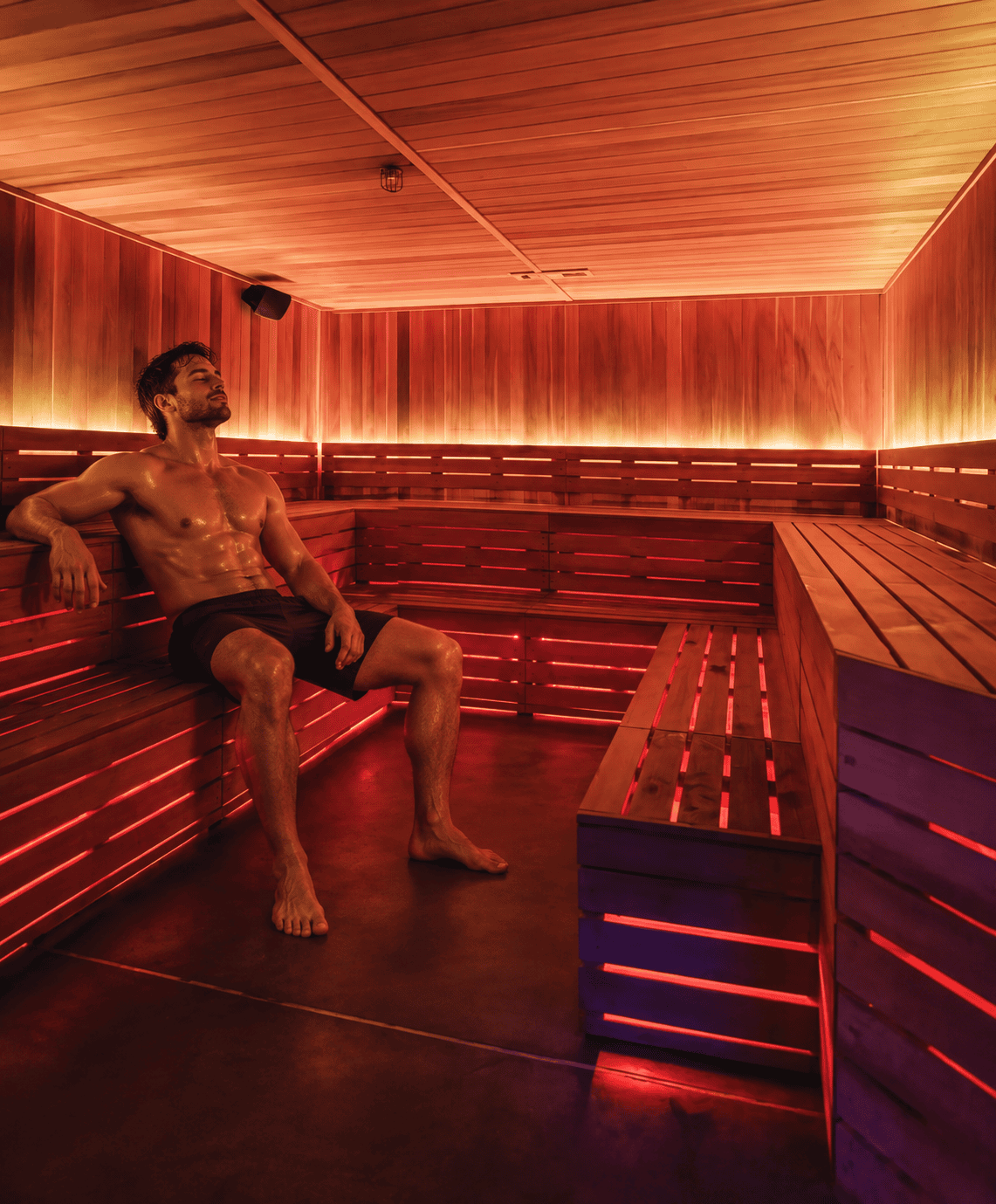
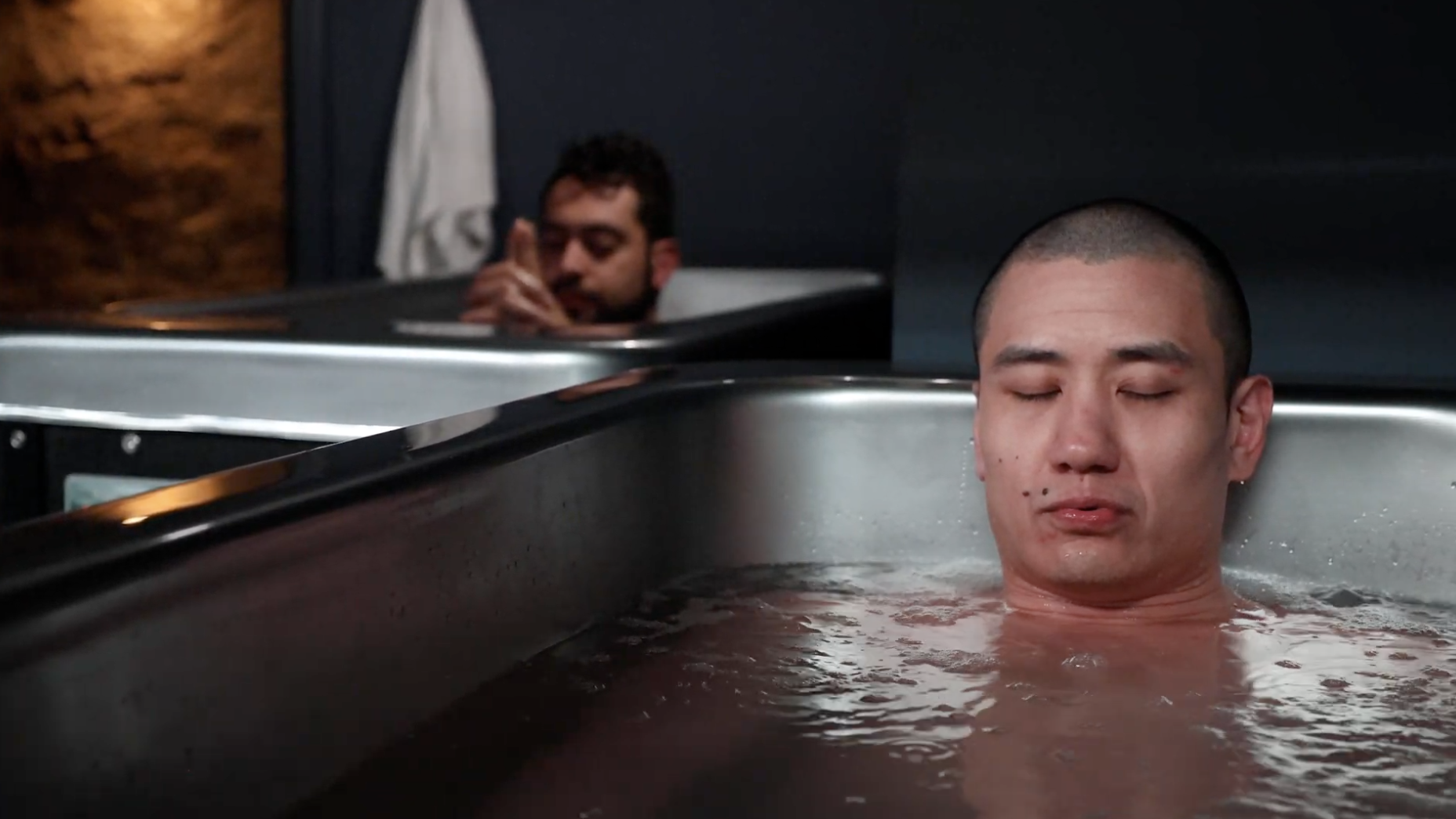
Breathwork is one of the core pillars at MindFuel, alongside sauna, cold plunge, and recovery. It is built into nearly every class we run, not as a warm-up to skip but as the actual point.
A few of the ways breath shows up at the studio in Pittsburgh's Strip District:
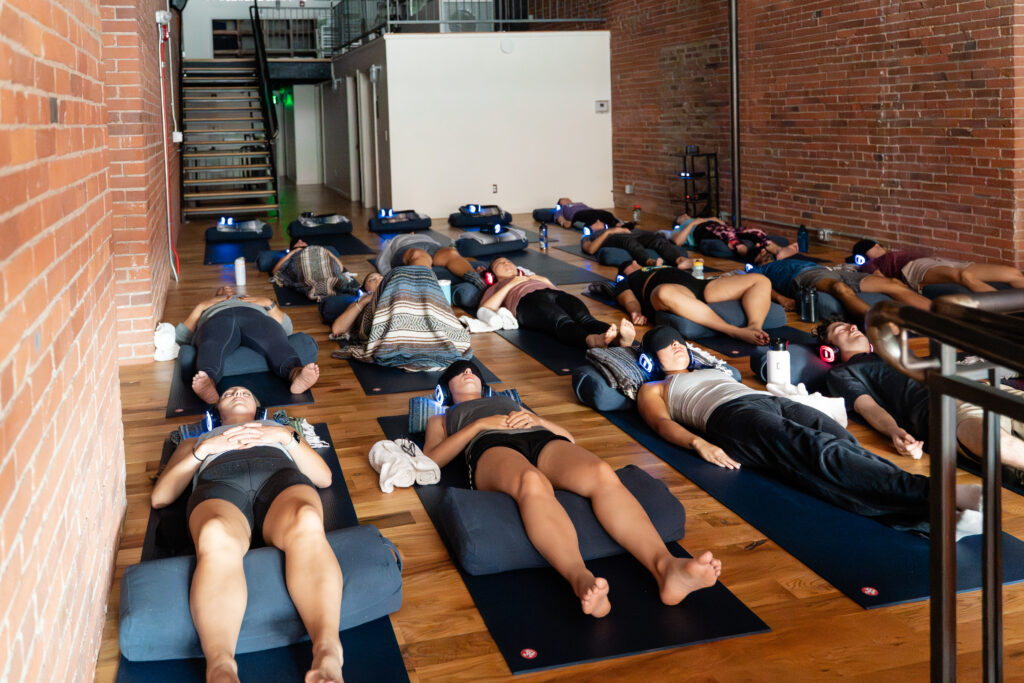
- Guided Breathwork + Contrast Therapy is a 75-minute class anchored by a 30-minute beat-based breathwork session where music guides the rhythm of your breath. It activates the body while regulating the nervous system into a calm, focused, meditative state. Then you take that state into the sauna and cold plunge.
- Guided Meditation + Contrast Therapy is a 75-minute class that weaves gentle, down-regulating breathwork with meditation designed to calm the mind and relax the body. Quieter, slower, perfect when life has been loud.
- Guided Release, Rise, and Recover each include a breath protocol through the sauna and cold plunge, matched to a different state goal: release tension, activate, or recover.
- Open and Quiet Free Flow sessions give you the space to run your own breath practice through sauna and cold plunge at your own pace.
The reason breath is built into every offering: a guided breath protocol changes the value of every other modality in the building. Sauna without breath is hot. Sauna with intentional breath is a nervous system reset.
How to Start Today
You do not need a class, an app, or a teacher to begin. Pick one of these and try it once before the day ends:
- Right now, sitting where you are. Four cycles of 4-7-8 breathing. Inhale 4 seconds through the nose, hold 7, exhale 8 through the mouth. That is roughly 90 seconds. Notice what shifts.
- Before bed. Five minutes of cyclic sighing. Lying flat. Short inhale, second smaller inhale, long exhale through the mouth. Most people fall asleep faster.
- Before something hard. Three minutes of box breathing. Four in, four hold, four out, four hold. Use it before a difficult email, a workout, a hard conversation.
Practice for one week. Notice what happens to your sleep, your stress recovery, and your patience with the people around you. If anything shows up, you have just installed a free, lifetime tool.
If you want a guided practice with the rest of the recovery tools that compound the effect, come find us. See our breathwork classes at MindFuel in the Strip District.
Bottom Line
You cannot delete stress from modern life. You can train your nervous system to recover faster from it. Breath is the cheapest, most portable tool we have for that, and the research is finally catching up with what people have been quietly using forever.
Get off your phone. Get into your body. Breathe.
Guided breathwork, sauna, cold plunge, and more.
$99 gets you two weeks of unlimited sessions at MindFuel, including guided breathwork classes, traditional Finnish sauna, four cold plunge tubs, yoga, red light therapy, and compression boots. Built for first-time visitors.
Start Your 2-Week Intro Book a Single Session