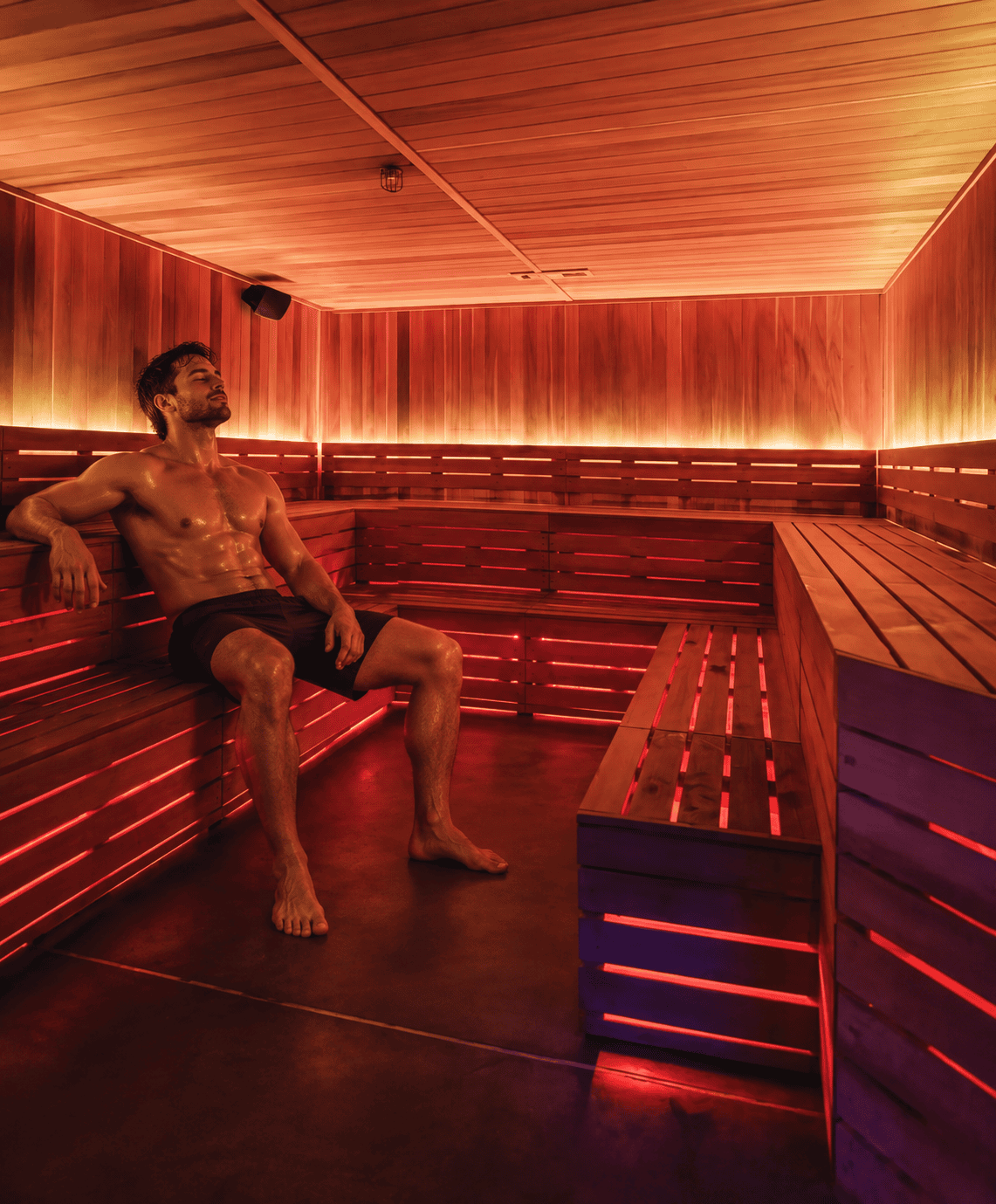
Every June, someone walks into MindFuel and asks the same question: "Why would anyone sauna in the summer?" The honest answer is the one nobody expects. Summer is actually the best time of year to be in a hot sauna, not the worst. Here is the science behind it, who it is for, and why we run our traditional Finnish sauna at full temperature year-round.
The thinking goes that it is already hot outside, so heating up more in a 190°F room makes no sense. That logic is intuitive but the research does not back it. Finns, who invented the sauna and live in a country with mild summers and brutal winters, use the sauna year-round, three to seven times per week. They are also among the longest-lived populations on earth.
There is a reason for that.
What the Research Actually Shows
The headline study on sauna and longevity comes from a 21-year follow-up of 2,315 middle-aged Finnish men, published in JAMA Internal Medicine in 2015 by Dr. Jari Laukkanen and colleagues at the University of Eastern Finland. The findings are some of the largest effect sizes ever reported for any single lifestyle practice.
This was not a six-month study. The Finnish researchers followed these men for two decades. The benefit scales with frequency. Two to three sessions per week is significant. Four to seven is substantial. Those people were not seasonal users. They saunaed in June and July just as much as January.
Why Summer Is Actually Ideal
Two main reasons people get summer sauna backwards: they think the goal is to "warm up" and they think the heat outside competes with the heat inside. Neither is what is happening.
The benefits of traditional sauna are not about being warm. They are about a specific kind of heat stress that drives cardiovascular adaptation, plasma volume expansion, heat shock protein production, and parasympathetic activation. None of that comes from a hot Pittsburgh afternoon. You need 174 to 212°F for 15 to 30 minutes to trigger those responses.
The Summer Sauna Myth
"It is already hot outside, so the sauna is redundant." The body confuses ambient heat with sauna heat. Athletes should wait until cooler months to train heat tolerance.
What Actually Happens
Pittsburgh summer afternoons rarely exceed 90°F. Traditional sauna runs 174°F+. The physiological response (HSPs, plasma volume, vasodilation, cardiac output) only triggers in the sauna range. Heat acclimation built in summer carries into outdoor performance.
If You Train Outside, Summer Sauna Is the Edge
This is where summer sauna stops being interesting and starts being a competitive advantage. If you are training for the Pittsburgh Half Marathon, running miles in the Strip, cycling Mount Washington, or doing any outdoor endurance work through the summer, heat acclimation directly improves your performance.
A 2007 study of trained runners by Scoon and colleagues had athletes do a 30-minute sauna session three times per week immediately after training, for three weeks. The results:
Translated: a few sauna sessions per week through the summer can shave meaningful time off your half marathon in the fall. Plasma volume expansion means more blood to deliver oxygen to working muscles. Heat acclimation means lower heart rate at the same effort. This is the exact reason elite endurance athletes train in saunas year-round, not just in winter.
Heat Shock Proteins and Recovery
Heat exposure also triggers the production of heat shock proteins (HSPs), a class of cellular proteins that repair damaged proteins inside your cells. HSPs are linked to longevity, recovery from exercise, reduced muscle atrophy, and protection against neurodegenerative diseases. Dr. Rhonda Patrick has written extensively on the protective role HSPs play in healthspan and athletic recovery.
This response is the same in July as it is in January. Your cells do not know what month it is. They know they are being heated to a stress threshold and need to respond.
Summer Pairs Sauna With Cold Plunge Even Better
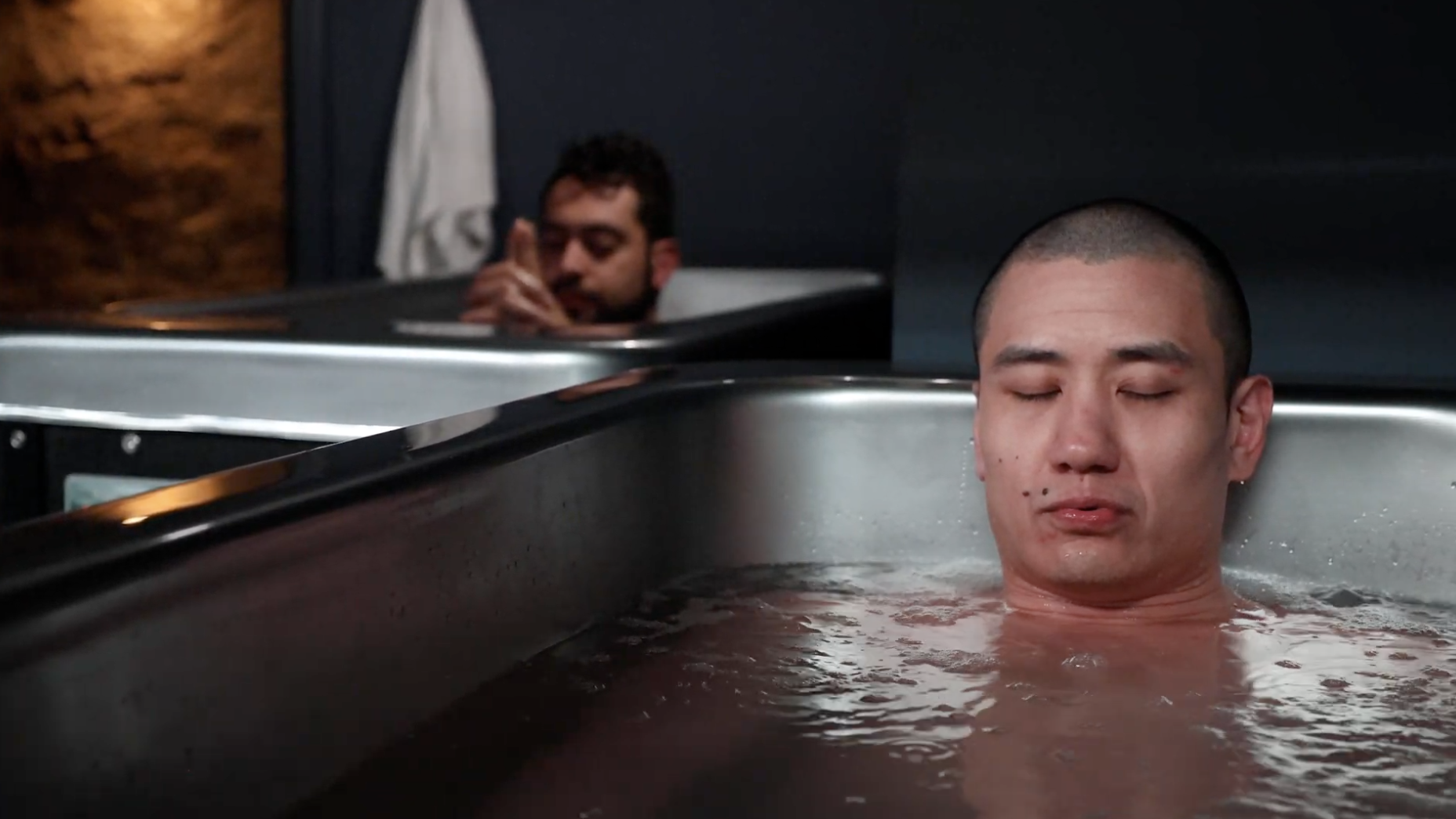
Contrast therapy (alternating sauna and cold plunge) is a year-round practice but the experience is different in summer. The cold plunge feels deeper and more satisfying when your body has been baking outside. The sauna rounds feel less punishing when you are not also fighting a Pittsburgh winter chill to get back into the building.
Practically: a summer contrast routine of two rounds of 15-minute sauna and 2-minute cold plunge stacks two of the most studied recovery modalities into a 45-minute window. There is no better time of year for it.
Hear It From Dr. Rhonda Patrick
Dr. Rhonda Patrick, biomedical scientist and founder of FoundMyFitness, has been the most consistent translator of the sauna research into practical protocols. Her 2021 review paper in Experimental Gerontology is a useful primer. The video below covers the cardiovascular and cellular mechanisms.
How MindFuel Approaches Summer Sauna
Our traditional Finnish sauna in Pittsburgh's Strip District runs the same temperatures year-round. We do not turn it down in June because the research does not change with the season. What does change is how you use it.
A few of the ways our schedule supports summer sauna:
- Guided Breathwork + Contrast Therapy stacks 30 minutes of beat-based breathwork with sauna and cold plunge. The breathwork primes the nervous system to actually use the heat stress for regulation rather than survival.
- Guided Meditation + Contrast Therapy is the slower, quieter version. Lower-intensity breath, meditation, sauna, cold plunge. Excellent for summer evenings after a hard outdoor training session.
- Guided Release, Rise, and Recover sessions all use sauna and cold plunge with intentional breath. Pick the one that matches your state going in.
- Open and Quiet Free Flow sessions give you the space to run your own protocol. Post-workout sauna for endurance athletes is a free flow play.
Practical Summer Sauna Guidelines
- Frequency: 2 to 4 sessions per week is the research-backed sweet spot for cardiovascular and longevity benefit. 4 to 7 sessions per week for the largest effect sizes from the Laukkanen data.
- Duration: 15 to 30 minutes per session in traditional sauna at 174 to 212°F. You should be heat acclimated to push to the upper end.
- Hydration: Critical in summer. Water plus electrolytes before and after. You are already losing more sodium through normal summer sweat than you would in winter.
- Timing for athletes: Post-workout sauna is where the heat acclimation gains live. The Scoon study used 30 minutes after training, three times per week.
- Stack with cold plunge: Two rounds of contrast (sauna then cold plunge) gives you the heat shock protein response and the dopamine/norepinephrine response in the same visit.
- Skip if: Pregnant, recovering from heat illness, or your doctor has flagged a cardiovascular condition.
Bottom Line
Summer is not the time to skip the sauna. It is the time to use it for everything it is good for: heat acclimation, cardiovascular fitness, cellular recovery, and a deeper, more satisfying contrast with the cold plunge. The Finnish data on 4-to-7-times-per-week sauna users was not seasonal data. They ran the sauna in July.
If you are training for fall races, working long hours under stress, or just want to use the science behind one of the most rigorously studied longevity practices, this is the season to start, not the season to skip.
Traditional Finnish sauna. All summer long.
$99 gets you two weeks of unlimited sessions at MindFuel, including our traditional Finnish sauna, four cold plunge tubs, guided breathwork, yoga, red light therapy, and compression boots. Built for first-time visitors.
Start Your 2-Week Intro Book a Single Session