The cold plunge conversation finally caught up with women. For years, the wellness industry treated female physiology like a smaller version of male physiology and called it research. The studies cited to scare women away from cold exposure were often built on male subjects, single-temperature protocols, or in some cases, rats.
The actual research on women and cold is more recent, more nuanced, and more interesting than what most of social media has been saying. Here is what we know now, what we do not, and how we built MindFuel in Pittsburgh's Strip District to match the science.
The Misconception
Dr. Susanna Søberg, one of the leading metabolic scientists working on cold therapy and author of Winter Swimming, has been direct about where the conversation went wrong.
The misconception has roots. A 2018 paper looking at the effect of chronic cold exposure on reproductive function in female rats has been cited, often without context, as a reason women should avoid cold plunge. What the paper actually studied was rats kept in -10°C air for four hours a day for 14 consecutive days.
That is not a two-minute cold plunge in a controlled tub with voluntary exit and full recovery. The conditions are not remotely comparable.
The Rat Study
- −10°C ambient air exposure
- 4 hours per day
- 14 consecutive days
- Female rats, no voluntary exit
- Chronic sub-zero stress
A Human Cold Plunge
- Controlled water exposure
- 1 to 4 minutes
- Voluntary exit, no force
- Recovery built in
- Trained nervous system response
What the Science Actually Shows
Cortisol drops, not spikes.
The most repeated concern about cold plunge for women is that it spikes cortisol and disrupts hormones. The data tells a different story.
A 2008 study from Leppäluoto and colleagues, published in the Scandinavian Journal of Clinical and Laboratory Investigation, followed 20 healthy women through 12 weeks of regular cold exposure (winter swimming or cryotherapy three times per week). Cortisol levels at weeks four through twelve were significantly lower than at week one. The study suggested habituation and a down-regulation of the stress axis. Regular cold exposure trained these women's bodies to handle stress better.
A 2023 study by Reed and colleagues in the Journal of Thermal Biology examined cortisol response in 16 participants (seven women) after cold plunge. Yes, there is an acute cortisol spike during immersion. But 180 minutes after the plunge, cortisol dropped by 47%. Cold plunge is a net cortisol reducer, not a raiser.
Women have a metabolic edge.
A 2021 study by Hanssen and colleagues, published in Molecular and Cellular Endocrinology, found that brown adipose tissue (the metabolic tissue activated by cold exposure to burn calories generating heat) was detected in 44.6% of women versus 35.9% of men. More important, cold-induced thermogenesis was significantly higher in women (P = 0.024).
Estrogen appears to boost the calorie-burning response to cold. Women are not at a cold-exposure disadvantage. The data suggests the opposite.
The dopamine and norepinephrine response is significant.
A landmark 2000 study by Šrámek and colleagues in the European Journal of Applied Physiology measured the acute response to cold water immersion. The numbers are striking.
Temperature Matters More Than People Think
Here is where the nuance gets important. Most of the studies showing strong benefit in women used water temperatures between roughly 15 and 18°C (59 to 64°F), not the 38 to 45°F water that has become the social media standard.
That is not "watering down" cold plunge. That is matching the protocol to the physiology. At slightly warmer water temperatures and shorter durations, women see the benefits show up while cortisol, progesterone, and thyroid hormones stay intact.
Dr. Søberg has been clear on this point: women thrive in slightly cooler water, not freezing water, especially during the luteal phase and menstruation. The American wellness industry's "colder is better" bias has often missed it.
Your Cycle Matters Too
The female endocrine system is not a flat baseline. Hormones cycle, and cold tolerance cycles with them. Cycle-aware cold plunge protocols are emerging from the research and from practitioners like Søberg.
Post-menopause: Research suggests even stronger cold tolerance after menopause, likely related to changing thermoregulatory baselines. The benefits compound, not disappear.
Hear It From Dr. Søberg
Dr. Susanna Søberg, founder of the Søberg Institute and one of the world's leading researchers on cold and heat exposure, has been the loudest voice pushing back on the "women should not cold plunge" narrative. Her research argues the opposite: women can absolutely benefit from cold exposure when the protocol is calibrated to their physiology.
How MindFuel Is Built for This
We did not build MindFuel for one temperature. We built it for four.
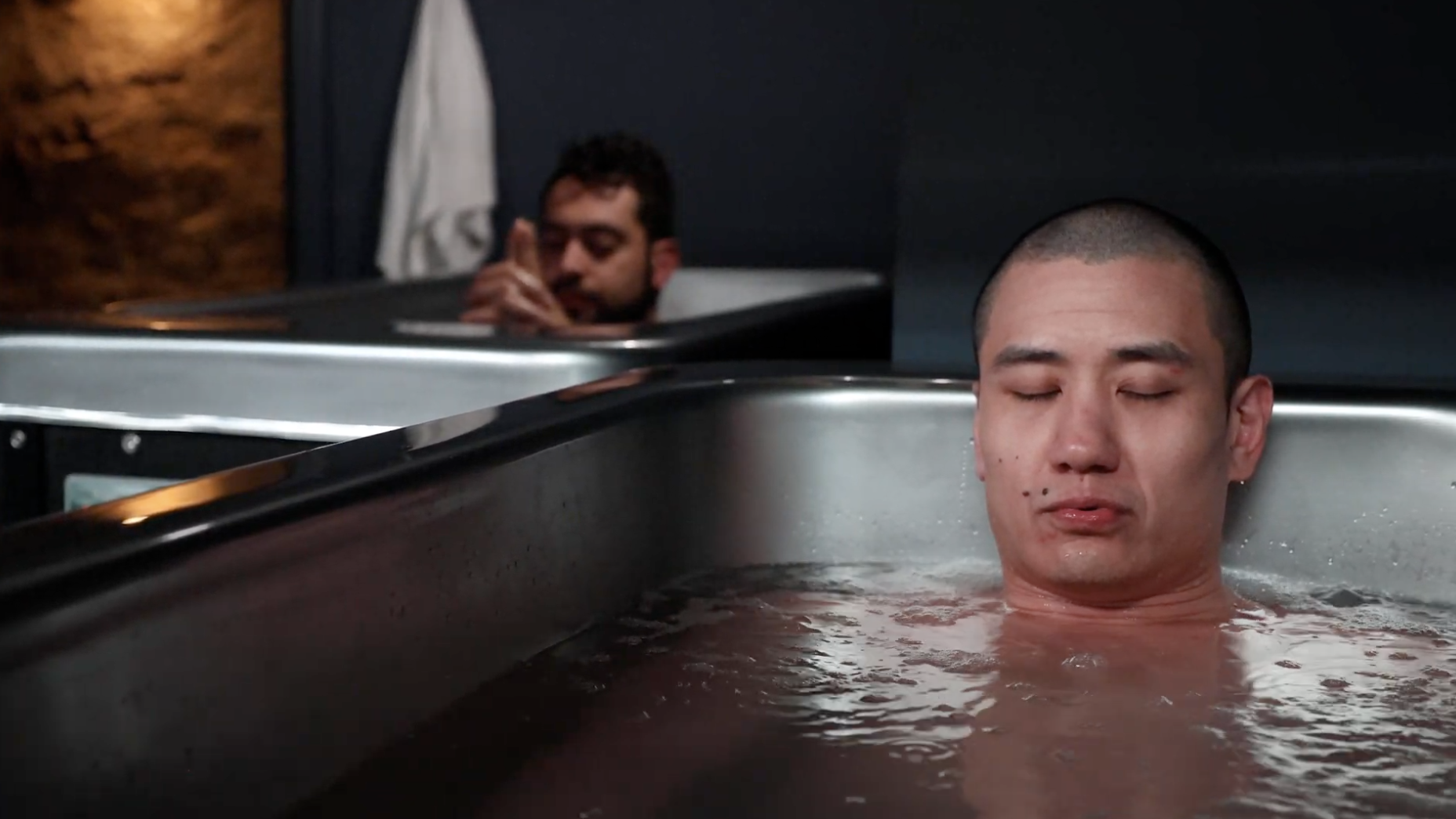
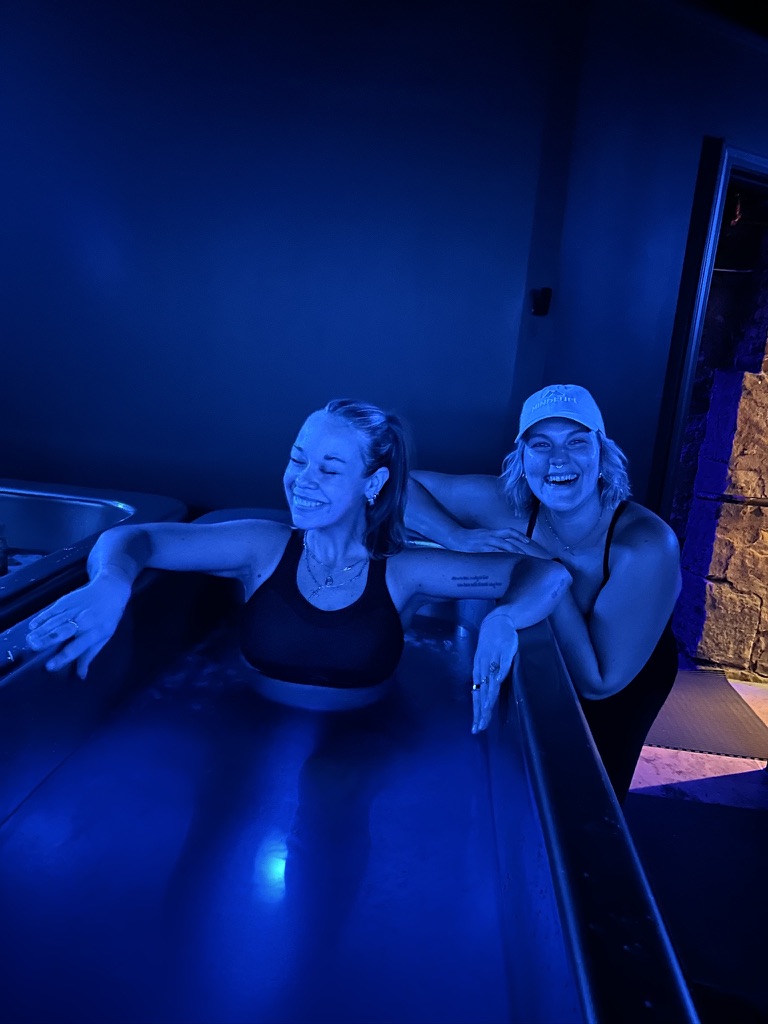
Our cold plunge room in the Strip District has four tubs at four different temperatures. This is intentional. The right tub for you depends on your goals, your cycle phase, your training load, and how you feel that day.
Tub 4 at 56°F sits right in the range Søberg and most cycle-aware research recommend for women, particularly during the luteal phase. Tub 3 at 49°F is the next step. Tub 2 and Tub 1 are for the days when you are heat adapted, in your follicular phase, and ready to go harder.
Choose your tub based on what your body is asking for that day. That is the entire point.
Practical Guidelines
- Start at warmer temperatures. Tub 4 (56°F) or Tub 3 (49°F) is the right starting point for most women.
- Build tolerance over weeks of consistent sessions, not over a single session.
- Match your duration and temperature to your cycle phase, not to whoever is in the tub next to you.
- Hydrate before and after. Electrolytes help, especially when stacking with sauna.
- Cold exposure works best as part of a routine. Two to four sessions per week is the research-backed sweet spot.
- Listen to your body. The point of cold plunge is regulation, not endurance.
A Word on Pregnancy and Trying to Conceive
This guidance is not for pregnant women or women actively trying to conceive. The data on cold plunge during pregnancy is much less developed, the risks of significant core temperature drops are real, and the conservative call is to avoid cold plunge during pregnancy. If you are actively trying to conceive, talk to your doctor before continuing a regular cold exposure routine. The benefits we are discussing here are for the general female population outside of pregnancy.
Bottom Line
Women are not too sensitive. The wellness industry just has not been nuanced enough.
The science on cold plunge for women is more interesting than the social media version. Cortisol drops over time. Brown fat activates more in women than in men. Anti-inflammatory effects show up where women actually want them, including PMS relief. Mood, energy, and stress tolerance build with consistent use. Temperature and duration should match the cycle and the individual, not a one-size-fits-all dare.
That is what we built MindFuel for. Four tubs, four temperatures, in our Strip District cold plunge room. Your call which one.
Two weeks unlimited. All four tubs.
$99 gets you two weeks of unlimited sessions, including our four cold plunge tubs at 38°F, 42°F, 49°F, and 56°F, traditional Finnish sauna, breathwork, yoga, red light therapy, and compression boots. Built for first-time visitors.
Start Your 2-Week Intro Book a Single Session