Walk into almost any commercial gym in Pittsburgh right now and you will see the same routine: heavy lift, then straight to the cold plunge. It feels productive. It looks disciplined. And for anyone training for strength or muscle growth, it is one of the most counterproductive things you can do with your recovery window. The research is not close.
Why Post-Workout Cold Plunge Blunts Your Gains
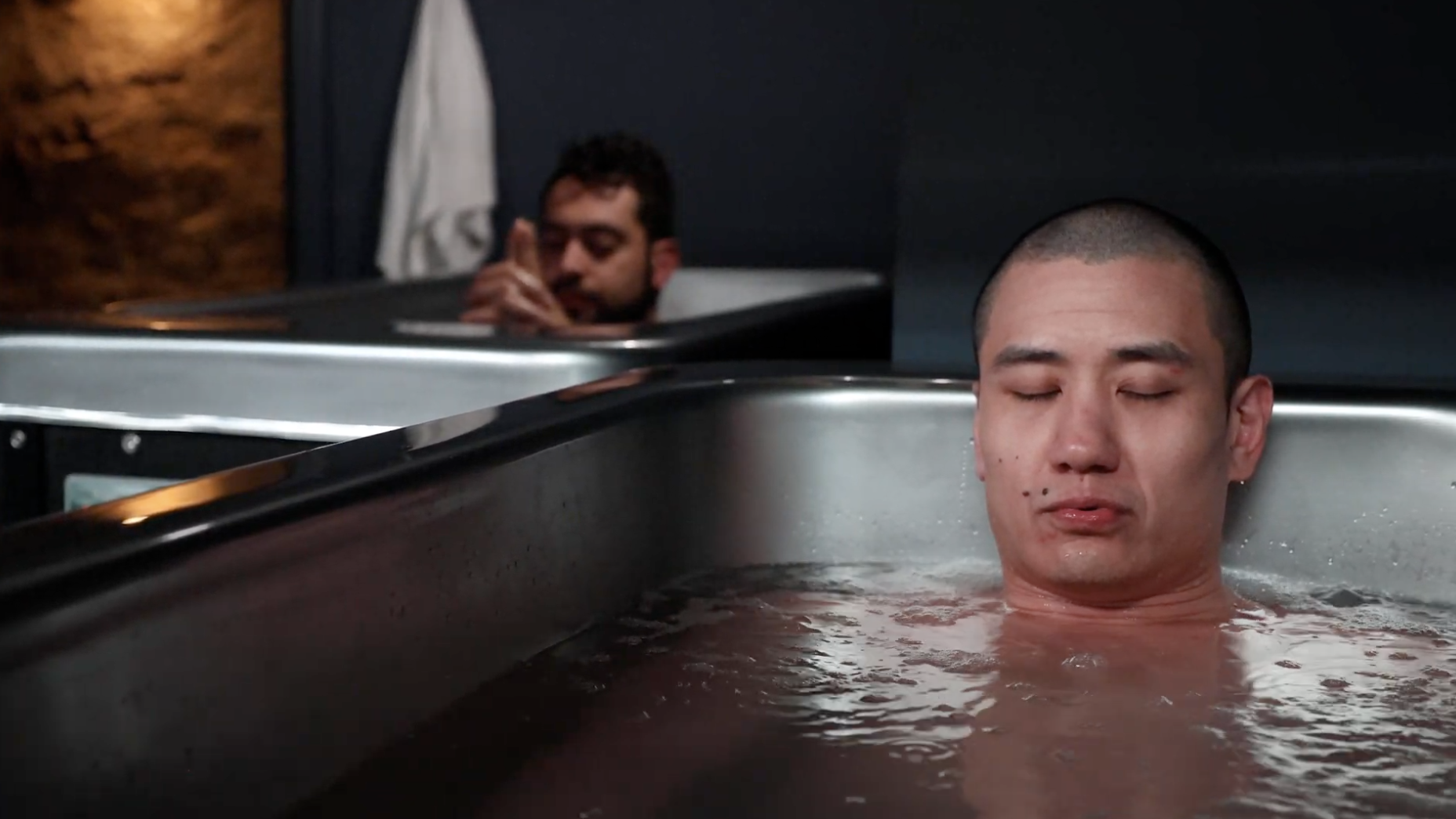
The single most cited paper on this topic is a 2015 study by Roberts and colleagues in The Journal of Physiology. Trained men strength-trained twice a week for 12 weeks. Half used cold water immersion (10 min at 50°F) after each session. The other half did active recovery. The cold plunge group ended the study with significantly smaller gains in muscle fiber size, satellite cell numbers, and anabolic signaling markers. The strength gap was smaller than the size gap, but the size gap was clear.
A 2024 systematic review and meta-analysis in the European Journal of Sport Science pooled the follow-up research. The conclusion:
The mechanism is not a mystery. When you strength train, you create local inflammation. That inflammation is not damage to be neutralized. It is the biological signal your body reads to build back stronger. Muscle protein synthesis rises. Satellite cells activate. The mTOR pathway lights up. Ribosomes get built to make more contractile proteins.
Cold water immersion within the first few hours after training blunts every one of those signals. You are literally putting out the fire that would have built the muscle.
For a 60-second version of the same message from a name most gym-goers know, Dr. Andrew Huberman explains the exact timing issue in this short clip. Same conclusion, different messenger.
When Cold Plunge Is Still the Right Call
To be clear, cold plunge is not the villain. It is a phenomenal tool used at the right time. Here is when it still works:
Cold Plunge Wins Here
- Rest days (no training that day)
- 4 to 6 hours after a strength session (not immediately)
- Before a workout as nervous system priming
- After endurance training if you need fast turnaround for the next day
- For anxiety, sleep, mood, and mental clarity, any time
Cold Plunge Loses Here
- Immediately after strength or hypertrophy training
- Any time within the first 4 hours post-lift
- Right after high-intensity resistance work in a growth-phase training block
- As a habit tied to your gym exit routine
The one specific case where cold plunge immediately after training may make sense is in a competition context where you need to be recovered enough to perform again in the next 24 to 48 hours. That is why elite endurance athletes still use cold plunge post-race. Recovery speed matters more than long-term adaptations at that specific moment. That is not most of us.
Cold Plunge Before a Workout: The Underused Move
Pre-workout cold plunge is one of the most underrated protocols in the sauna and cold plunge world. A short cold plunge (60 to 90 seconds in Tub 4 at 56°F, or 30 to 60 seconds in a colder tub) about 15 to 30 minutes before you train can:
- Spike norepinephrine and dopamine, sharpening focus and reaction time
- Prime your nervous system for output
- Cool your core so you can push harder in a hot workout without overheating
- Reduce pre-workout anxiety, especially before hard sessions or competition
Because you are training after, the anti-inflammatory effects of cold do not blunt any post-workout recovery signals. You get the sharpening benefit without the muscle-growth tax.
This is especially useful for Pittsburgh runners training through summer heat. A 60 second dip in the 56°F tub before a hard evening run drops your core temperature just enough to help you push through the workout that would otherwise cook you.
Why Sauna After Workout Is the Move Instead
Heat does the opposite of what cold does to your recovery signals. Post-workout sauna amplifies the same pathways cold plunge blunts.
Post-workout heat also activates heat shock proteins (HSPs), a family of cellular proteins that repair damaged proteins inside your cells. HSPs support muscle recovery, reduce atrophy, and are linked to longevity. Dr. Rhonda Patrick has published extensively on how sauna use as a lifestyle practice compounds these benefits over time.
For endurance athletes, the plasma volume expansion is the standout finding. More blood volume means more oxygen to working muscles per heartbeat. This is why elite marathoners, cyclists, and triathletes have been sauna-training for decades. Heat exposure is a legal, cheap, evidence-backed performance boost that compounds over weeks.
Hear the Full Breakdown
The Mind Pump Show (Sal Di Stefano, Adam Schafer, Justin Andrews) has spent years translating the exercise science literature for real athletes. Their breakdown of sauna use before and after workouts covers the same research this post walks through, in more depth. Worth the watch if you want to hear how three seasoned coaches think about the tradeoffs.
The Perfect Protocol
Here is the full sequence for a strength-focused training day, calibrated to research and what we see work at MindFuel with our members:
Strength Training Day: The Full Stack
Pre-workout cold plunge (60 to 90 seconds)
Tub 4 (56°F) for 60 to 90 seconds, or Tub 3 (49°F) for 45 to 60 seconds. Purpose: dopamine and norepinephrine spike, focus, nervous system priming. Skip if you already feel dialed in.
Train hard
Whatever your session is. Strength, hypertrophy, endurance, or a mixed workout. Push it, do the work.
Rehydrate and cool down naturally
Water plus electrolytes. Let your heart rate settle. Do not shower yet. You want your body still warm heading into the next step.
Sauna (the real work)
Traditional Finnish sauna at 174 to 200°F for 15 to 20 minutes. This is where growth hormone spikes, DOMS drops, HSPs activate, and plasma volume adapts. If it is your first month of doing this, start at 10 to 12 minutes and build up.
Cool down slowly
Lukewarm shower (not cold) or just let yourself air-cool. Hydrate more. Eat something with protein within an hour.
Optional: cold plunge if you want it
By this window, muscle protein synthesis has done its early work and cold no longer blunts the adaptive signal. If you want the cold plunge that day, this is when.
For endurance days (long runs, cycling, swimming), the same order works but cold plunge immediately after is less costly to your goals. Endurance adaptations are not as affected by post-exercise cold. If you did a hard tempo run and want the acute recovery from cold plunge, that is fine. If you did a heavy squat day, skip the cold and get in the sauna instead.
What This Looks Like at MindFuel
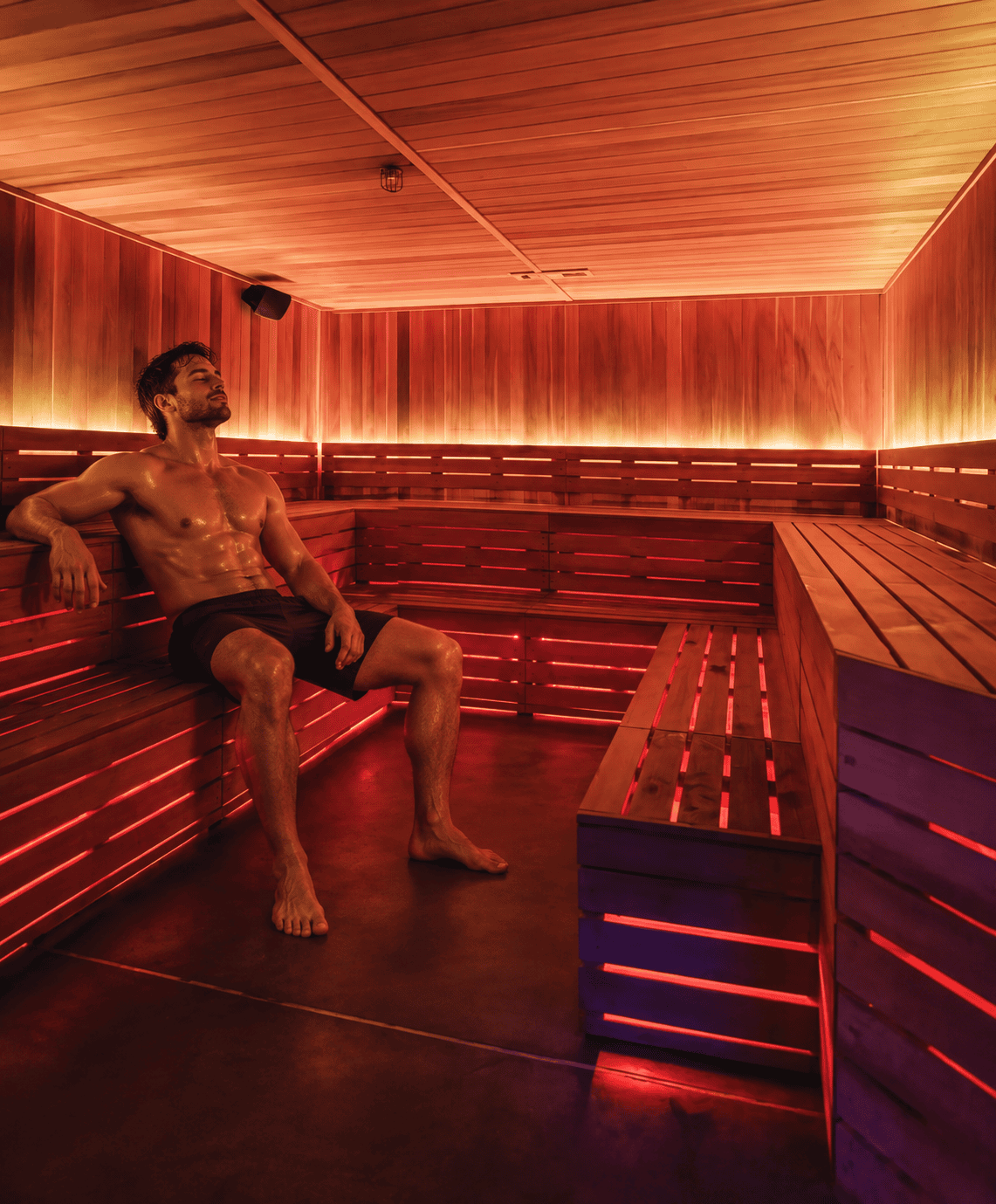
Our traditional Finnish sauna at MindFuel in Pittsburgh's Strip District runs at 174 to 195°F. Members who train nearby (or in our own studio) walk in from the gym, hydrate, and head straight in. Twenty minutes later they walk out feeling recovered, not depleted. Members who are prepping for a hard workout use one of the warmer cold plunge tubs (Tub 4 or Tub 3) for a short pre-workout priming dip.
The full contrast therapy protocol (sauna first, end on cold) is still the right move on rest days or 4-plus hours after strength training. Read our definitive contrast therapy protocol for how that sequence works and why order matters.
For endurance-specific heat adaptation, our post on why sauna in the summer is optimal for outdoor athletes covers the VO2 max and plasma volume research in depth.
Frequency
- Every strength training day: Sauna after. This is the recovery accelerator that compounds.
- 2 to 3 endurance sauna sessions per week: Enough to drive plasma volume expansion.
- Cold plunge before workouts: As often as you want. No downside if kept short.
- Cold plunge for its own benefits (mood, sleep, mental clarity): 2 to 3 times per week, on rest days or 4-plus hours post-lift.
Common Mistakes
- Cold plunge immediately after a lift. The default gym recovery move. It's blunting the exact adaptation you just paid for with hard work.
- Ice bath as a badge of discipline. Doing it because it looks tough rather than because it fits your goal. Post-workout heat is harder mentally for most people. Do the harder thing that also works.
- Skipping the sauna after a workout because you feel tired. This is when it matters most. The 20 minutes of heat is where the growth hormone spike, DOMS reduction, and HSP activation come from.
- Sauna at low temperature. Traditional sauna benefits kick in at 174°F and up. Infrared saunas rarely hit this range and produce a different physiological response.
Bottom Line
If you are training for strength, muscle, or long-term athletic performance, the order looks like this: cold plunge before the workout (optional), train hard, sauna within 30 minutes after, cold plunge on rest days or 4-plus hours later. Nothing about this is complicated. It just runs counter to what most of your gym is doing.
The people who figure this out get more out of every training session for the rest of their lives. It compounds quietly.
Two weeks unlimited. Sauna, four cold plunge tubs, all of it.
$99 gets you two weeks of unlimited sessions at MindFuel in the Strip District, including our traditional Finnish sauna, four cold plunge tubs at 38°F, 42°F, 49°F, and 56°F, guided breathwork, yoga, red light therapy, and compression boots. Built for first-time visitors.
Start Your 2-Week Intro Book a Single Session